Q&A with Geoff: My Wife’s Childhood Issues Cause Her to Mistrust Me
Question
My wife does not feel safe around me. If I get angry when engaged in activities such as working on the car, fixing things around the house, or dealing with technology, it triggers her.
I have never gotten angry with her directly in 24 years of marriage (her words). She was abused as a child by her brothers and when they got angry, they found her and took it out on her.
So, my getting angry about anything triggers a physiological response in her which she has no control over.
I can’t be perfect in my behavior, but I try my best to not get frustrated or angry.
It seems we are both walking on eggshells, me worried I will trigger her, and she worried she will be triggered.
Answer
I’m sorry to hear you’re both walking on eggshells as you try to figure out how to keep your emotional balance with each other. It’s got to be exhausting to live in an emotional minefield with constant worry that some unguarded word will send your marriage into a downward spiral.
Let’s talk about some ways you can help improve this relational paralysis.
1. Trauma Needs Proper Support and Treatment
Childhood trauma can hold a marriage hostage without the proper support and treatment.
I highly recommend you do everything you can to encourage your wife to get qualified help for the abuse she experienced in her home.
Trauma survivors often feel overwhelmed by:
- confusion
- fear
- guilt
- self-blame
- mistrust
- anxiety
- depression
Trauma is treatable and doesn’t have to be a life sentence. There are effective treatment approaches such as EMDR, ART, Somatic Experiencing, and Lifespan Integration.
2. Approach the Conversation with Care
This is a delicate conversation, as she may feel blamed or broken when you encourage her to get help.
Make sure you frame trauma as something that happened to her, not something she is doing wrong.
You can:
- reassure her that you don’t blame her
- validate her sensitivity and fear
- position the trauma as the problem, not her
Remove barriers to getting help by offering support with time, finances, and emotional encouragement. You might also offer to attend sessions with her so she knows you want to heal together.
3. How You Respond Still Matters
In the meantime, recognize that her getting triggered doesn’t have to mean disconnection.
Ask yourself:
- How do you respond when she is triggered?
- Do you become frustrated with her reaction?
- Does she respond better when you show empathy?
While you can’t control her reactions, your responses can provide safety and comfort.
4. Unite Against the Trauma, Not Each Other
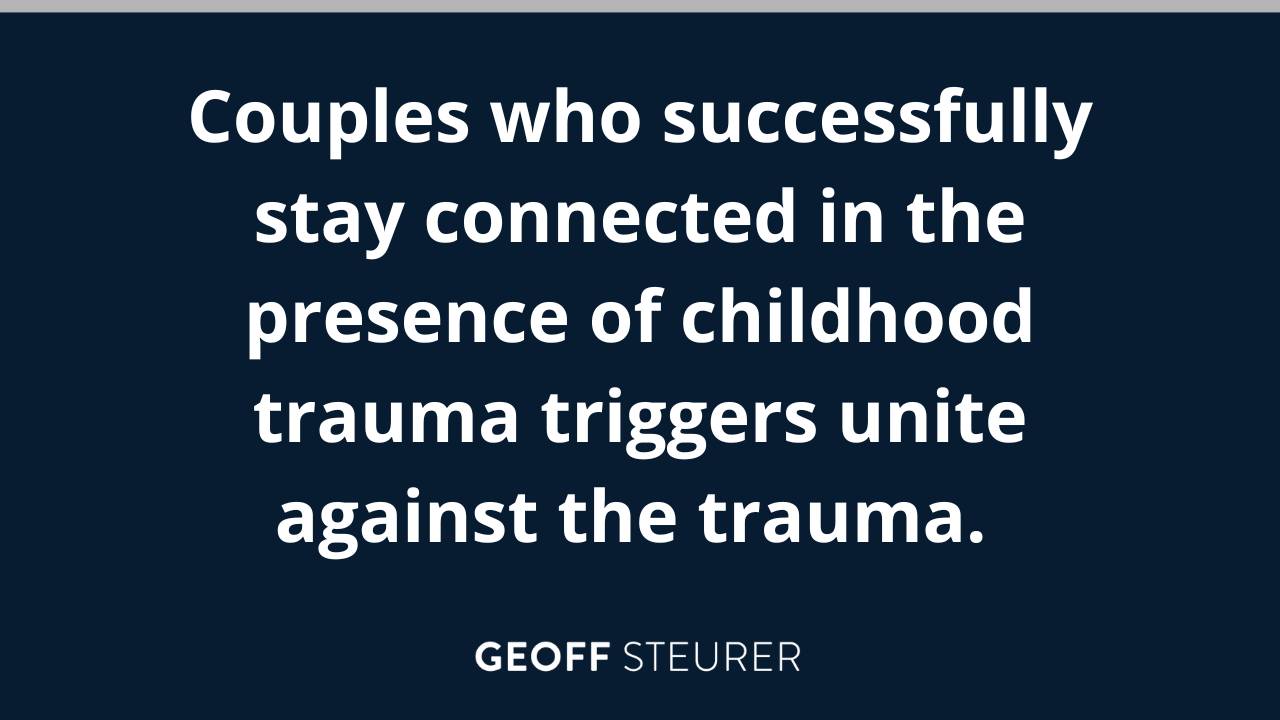
Couples who stay connected in the presence of trauma learn to unite against the trauma itself.
They see the trauma as the problem — not each other.
You might invite her to work together in those moments and stay emotionally connected when triggers arise.
Over time, your consistent compassion and patience may help her experience that you are not a threat, even when she feels triggered.
5. Understand the Limits of Your Control
You could be the safest and most careful person, and she may still feel threatened. This is the reality of unresolved trauma.
Many people carry a deep belief that they are broken beyond repair, even when healing is possible.
I hope your wife can find healing and discover that she doesn’t have to live in a constant state of fear.
6. Take Care of Yourself Too
If she is not ready to work through her trauma, it’s important that you continue to care for your own emotional well-being.
You can:
- build supportive relationships with other men and family members
- stay connected to your strengths
- find meaningful ways to contribute to your family and community
It’s easy to become isolated when your partner responds with fear or mistrust. Over time, this can erode your confidence and create its own unhealthy cycle.
Twenty-four years of love and support says a lot about your commitment to your wife. I hear your exasperation and confusion about what to do.
I wish I could tell you when and if this will resolve.
If This Question Feels Close to Home…
Depending on where you are right now, here are a few next steps that may help:
• Feeling stuck in repetitive thoughts or emotional loops?
👉 Why You Can’t Stop Thinking About It - a free guide to help calm your nervous system and interrupt painful mental spirals.
• Want to show up better for your partner but don’t know how?
👉 10 Ways to Support Your Partner - a free practical guide to help you build trust without adding pressure.
• Ready to take structured responsibility and rebuild trust step by step?
👉 The Trust Building Bootcamp - a 12-week self-guided course for the partner who broke trust and wants to repair it the right way.
• Looking to strengthen your marriage and family culture overall?
👉 Great Truths Course - a guided course to bring more peace, clarity, and unity into your home.
You don’t have to stay stuck. There are clear next steps available when you’re ready.