Q&A with Geoff: Is There Any Point in Enduring Another Family Reunion?
Question:
We have a family reunion coming up this summer and I’m not so sure I want to attend. None of us sisters really get along very well and so our children hardly know each other. My kids have sports camps and other commitments virtually every weekend, so this just feels like we’re cramming one more thing in. I feel torn out of obligation to go, but I honestly have no idea if it even matters. It’s not like anything changes in my relationships with my family after attending in the past. We just do our best to get through it and life goes back to normal. Is this something I should feel guilty about missing?
Answer:
Unless your family is abusive or emotionally toxic for your marriage or your kids, then I recommend you go. It doesn’t sound like there are any reasons not to go, except that you don’t feel close to your family. Because you’re asking me the question and feel some kind of emotional pull toward your family, I’m going to encourage you to lean into your family and show up.
I could write ten columns about the effect our individualistic culture has on our relationships. It keeps us focused only on what’s best for us. We act like consumers in relationships and become dissatisfied easily and expect our loved ones to live up to our expectations. These attitudes untie us from the moorings of family, neighbors, and community connection.
Ultimately, this is bad for our mental and emotional health, as we’re wired to thrive in groups. Being with a group of strangers or friends at a soccer game isn’t going to fill you up the same way you can be filled as you work hard to invest in and improve your family relationships.
Why are you distant from your siblings and parents? Are you waiting for them to make the move to connect? What would happen if you really took an interest in their lives and used this reunion as an opportunity to build new bridges?
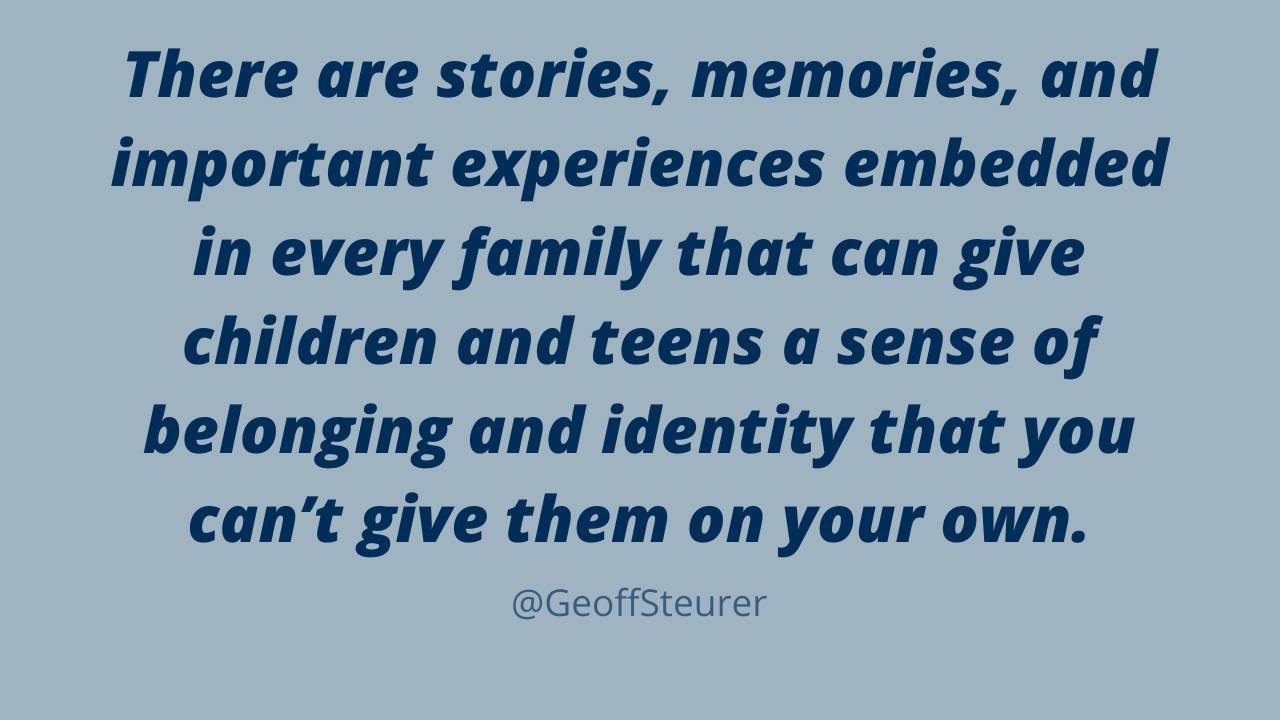
I also think it’s important for your children to connect to the larger family so they can better connect to their own history. There are stories, memories, and important experiences embedded in every family that can give children and teens a sense of belonging and identity that you can’t give them on your own.
A family reunion is only as meaningful as you make it. Every person there has stories, gifts, struggles, and important things to contribute to the whole group. I encourage you to go with an open mind so you can approach your siblings, parents, and all of the children with a curiosity that will build new bridges.
Ask good questions and give them your undivided attention so you can learn about them. You might be surprised at what you learn.
Again, unless your family is abusive or harmful, then it’s worth it to invest in building relationships with these people. Give your children the opportunity to know themselves better through the lives of their grandparents, aunts, uncles, and cousins. You might be surprised how your interest, energy, and enthusiasm toward your family members can shift the entire family dynamic and create a new experience for everyone attending.